
The Modern QA Playbook: Testing Fast-Moving AI Codebases Without Burning Out
Discover how modern quality assurance engineers adapt to rapid continuous delivery. Learn practical strategies to prevent regressions, automate critical user flows, and maintain system reliability without burning out.
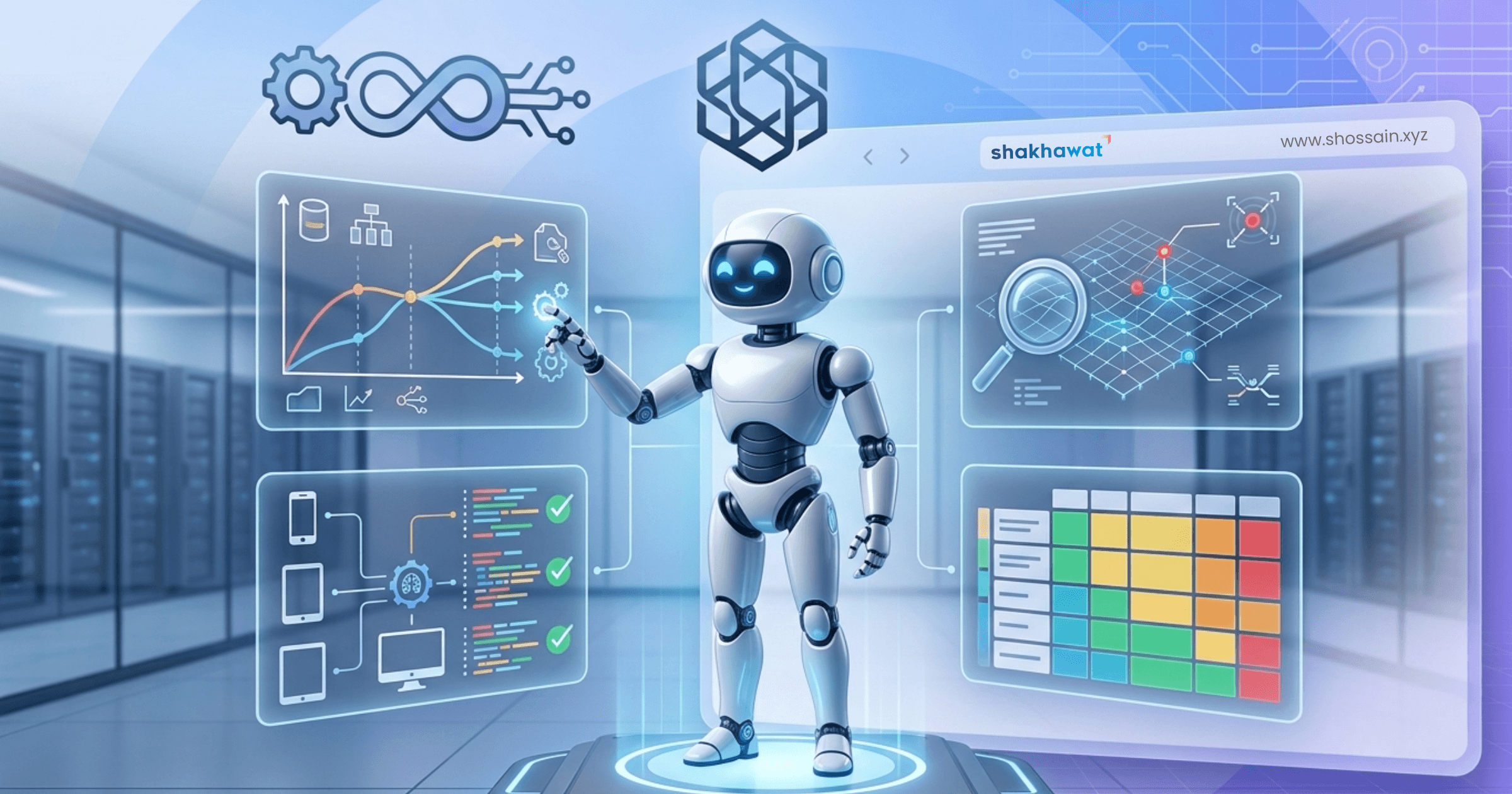
Discover how modern quality assurance engineers adapt to rapid continuous delivery. Learn practical strategies to prevent regressions, automate critical user flows, and maintain system reliability without burning out.
When generative tools allow product teams to scaffold, build, and deploy entire platforms in days rather than months, traditional software testing cycles completely break down. The old paradigm of waiting weeks for a stable build before running manual and automated test suites is incompatible with modern continuous delivery (Nagila et al., 2025).
When code changes hourly, QA engineers face a massive risk of burnout, chasing a moving target while trying to catch regressions before they hit production. To thrive in this fast-moving environment, QA must evolve from a reactive bottleneck into a proactive orchestration layer.
Here is the modern playbook for testing AI-assisted codebases without burning out.
1. Shift from Testing Code to Validating Logic and System State
In traditional development, QA teams spend significant time verifying syntax, basic form validations, and layout bugs. With AI-assisted code generation, low-level syntax errors are less common, but structural and logical regressions happen constantly because the underlying architecture shifts rapidly.
The Strategy: Stop treating every minor line of code as an isolated test case. Instead, focus your testing efforts on system states, data flow between components, and API contract stability.
The Benefit: By elevating your scope to system logic, your tests remain resilient even when the underlying code changes entirely.
2. Implement Lightweight, Living Automation Pipelines
Writing massive, brittle end-to-end test suites that break every time a button moves is a primary source of QA burnout. When features deploy daily, maintenance debt on old test scripts quickly overwhelms the team.
The Strategy: Lean into modern, lightweight testing frameworks paired with AI-driven test healing tools. Focus your automation strictly on critical user journeys, such as authentication, multi-tenant permission layers, and data submission loops (Nagila et al., 2025).
The Benefit: You drastically reduce the time spent fixing broken test scripts, letting automation handle the heavy lifting while you focus on exploratory edge cases.
3. Establish Clear Feature Flags and Canary Deployments
Testing everything in a monolithic staging environment before a single, massive release day is an outdated practice. In fast-moving environments, staging environments often drift out of sync with production.
The Strategy: Work closely with engineering to push features behind feature flags and utilize canary deployments. This means new AI-generated features are rolled out to a tiny fraction of real users first.
The Benefit: QA can validate real-world behavior and error telemetry under live conditions without risking the entire platform. If a regression occurs, the flag is flipped off instantly.
4. Protect Your Energy: Prioritize High-Risk Exploratory Testing
If you try to manually test every single AI-suggested update, burnout is guaranteed. You cannot out-speed an automated code generator manually.
The Strategy: Delegate repetitive regression checks entirely to your automated pipelines. Reserve your human brain power for exploratory testing, usability tracking, and edge cases that automated scripts cannot anticipate, such as complex multi-tenant permission overlaps or confusing UX states when an API times out.
The Benefit: This division of labor keeps your work engaging, leveraging your deep domain expertise where it actually matters.
Conclusion
Testing fast-moving AI codebases is not about working harder or putting in longer hours to chase endless deployments. It is about working smarter. By automating repetitive checks, focusing heavily on system logic, and embracing phased rollouts, QA engineers can maintain absolute system reliability while keeping their sanity intact.
References
Dallal, D. (2024). Accelerate: The Science of Lean Software and DevOps: Building and Scaling High Performing Technology Organizations. IT Revolution Press. (Cited for continuous delivery metrics and deployment frequency frameworks).
Google Testing Blog. (2023). Continuous Testing in the Age of AI-Assisted Development. Retrieved from engineering best practice publications.
Nagila, A., Trivedi, N., Nagila, R., Trivedi, K., Bhardwaj, S., & Rani, J. (2025). A Framework for Automated Software Testing using Machine Learning and Artificial Intelligence. Proceedings of the International Conference on Knowledge Engineering and Communication Systems (ICKECS), IEEE Xplore.
Zhang, J. M., Harman, M., Ma, L., & Liu, Y. (2020). Machine learning testing: Survey, landscapes and horizons. IEEE Transactions on Software Engineering, Volume 48, Issue 1, pages 1-36.
Recommended Articles
A few more reads worth your time.

Artificial intelligence (AI)
Trustworthy AI: Bridging the Gap Between UX and QA
How do you design AI that users actually trust? This guide breaks down the essential collaboration between UX and QA, showing teams how to build transparent interfaces, stress test autonomous agents, and master graceful degradation.

UX/UI Design
UX/UI Trends to Watch for in 2025
The digital world is evolving at an unprecedented pace, and with it, the field of UX/UI design is undergoing significant transformations. In 2025, web designers and developers will continue to push the boundaries of creativity and user experience. As we look ahead, several trends are emerging that promise to shape the way we design and interact with digital products. Here’s a look at the key UX/UI trends to watch for in 2025.

Web Design
The Power of Color Psychology in Web Design: Enhancing User Engagement
In today’s fast-paced digital world, web designers are constantly striving to create visually captivating and interactive websites that not only engage users but also drive conversions. One of the most influential elements in the design process is color psychology. This powerful tool can significantly affect user behavior, perception, and engagement, making it an essential consideration for any web design strategy.